The Peony Puzzle

The Peony Puzzle: A Lesson in Patience, Place, and Contentment
Peonies have a way of anchoring us to memory. Many of us picture them blooming in a grandmother’s yard—soft pinks and creamy whites unfolding just as the school year ended and summer truly began. They are plants that reward longevity, not urgency, and they quietly teach the same lesson year after year.
My First Lesson in Peony Patience
My own introduction to peonies began nearly 25 years ago, shortly after my husband and I bought our home in Middleton. I knew very little about gardening then. I only knew that peony blooms stopped me in my tracks.
I bought every peony in bloom that the nursery had—six plants in total—and planted them immediately. That first spring was lovely.
Then came two springs of nothing but healthy green foliage.
No blooms. No explanation. Just waiting.
I wondered if I had planted them incorrectly or if something was wrong with the soil. Eventually, after enough conversations with experienced gardeners, I learned the truth: peonies are not in a hurry—and they don’t appreciate being rushed.
“First They Sleep, Then They Creep, Then They Leap”
There’s an old gardening adage that fits peonies perfectly:
The first year they sleep.
The second year they creep.
The third year they leap.
Or, said another way: the first year is for the root, the second for the shoot, and the third for the flower.
When a peony is planted—or moved—it puts nearly all of its energy into establishing deep, permanent roots. These plants are thinking decades ahead. A well-sited peony can bloom reliably for 50 years or more, but only if it’s given time to settle in.
The lack of flowers isn’t failure. It’s preparation.
Why Placement Matters More Than Almost Anything
Beyond patience, peonies are deeply affected by where they’re planted.
They need:
Full sun—at least six hours a day—to produce strong stems and abundant blooms
Consistent moisture, especially during hot, dry summers
Well-drained soil, so roots stay healthy and deep
Peonies planted in full shade may survive, but they often won’t bloom well. And plants that experience drought stress in midsummer are far less likely to set strong buds for the following spring. Content peonies are well-sited peonies.
The Importance of “Eyes”
If you want to understand how quickly a peony might bloom, look at the root.
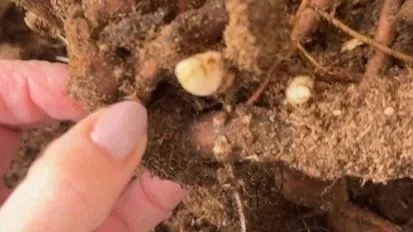
Peony roots have small pink or white growth points called eyes. Each eye has the potential to become a flowering stem.
2–3 eyes: typically bloom in year two or three
3–5 eyes: often bloom in the second year
6–8 eyes: mature, energy-rich roots that frequently bloom the first year
When I look back, my original peonies clearly fell into that first category. The wait felt long—but the reward was worth it.
A Few Practical Peony Truths
Plant shallow. Eyes should sit no more than 1–2 inches below the soil surface. Too deep, and the plant may never bloom.
Ants are harmless. They’re attracted to the sweet sap on the buds, not responsible for opening flowers.
Once planted, don’t move them. Peonies resent disruption and will reset their internal clock if transplanted.
Low Maintenance, Long Reward
Once established, peonies are remarkably self-sufficient. With proper sun, occasional deep watering, and a light feeding in spring, they quietly do their work year after year—asking little and giving much.
Why Peonies Teach Us More Than Gardening
There’s a saying often attributed to Audrey Hepburn: “To plant a garden is to believe in tomorrow.”
Peonies take that belief one step further. They ask us to trust not just tomorrow, but years ahead—to plant something knowing we may need to wait, tend carefully, and allow time to do its work.
In that way, peonies feel deeply connected to the values I hold most dear: patience, strong roots, thoughtful placement, and long-term flourishing.
If you enjoyed this, you may want to join my flower friends newsletter where I swap tips, share photos, and chat about all the contentment and joy flowers bring our hearts and homes.